The Ultimate Guide to a Party Outfit for Ladies: What to Wear and Why It Works
Party outfit for ladies balances three things: the dress code of the event, a silhouette that fits your body well, and one clear focal point, whether that’s color, texture, or a statement accessory. A satin slip dress with heeled sandals works for cocktail parties, a sequin top with tailored trousers suits a dinner party, and a fitted jumpsuit covers almost every “not sure what to wear” situation in between.
That’s the one-sentence version. Here’s the version that actually helps you get dressed.
First, Decode the Dress Code
Half the stress around party dressing has nothing to do with your closet, it’s not knowing what “party” actually means for that specific invitation. A friend’s casual apartment gathering and a company holiday event both get called “a party,” but they call for completely different outfits.
| Dress Code Term | What It Actually Means | Outfit Direction |
|---|---|---|
| Casual / Come As You Are | Everyday clothes, slightly elevated | Nice jeans, a great top, statement shoes |
| Dressy Casual | Put-together but not formal | Midi dress, jumpsuit, or skirt-and-blouse |
| Cocktail | Polished, evening-appropriate | Cocktail dress, dressy separates, heels |
| Semi-Formal | One step below black-tie | Longer dress, tailored suiting, elevated fabric |
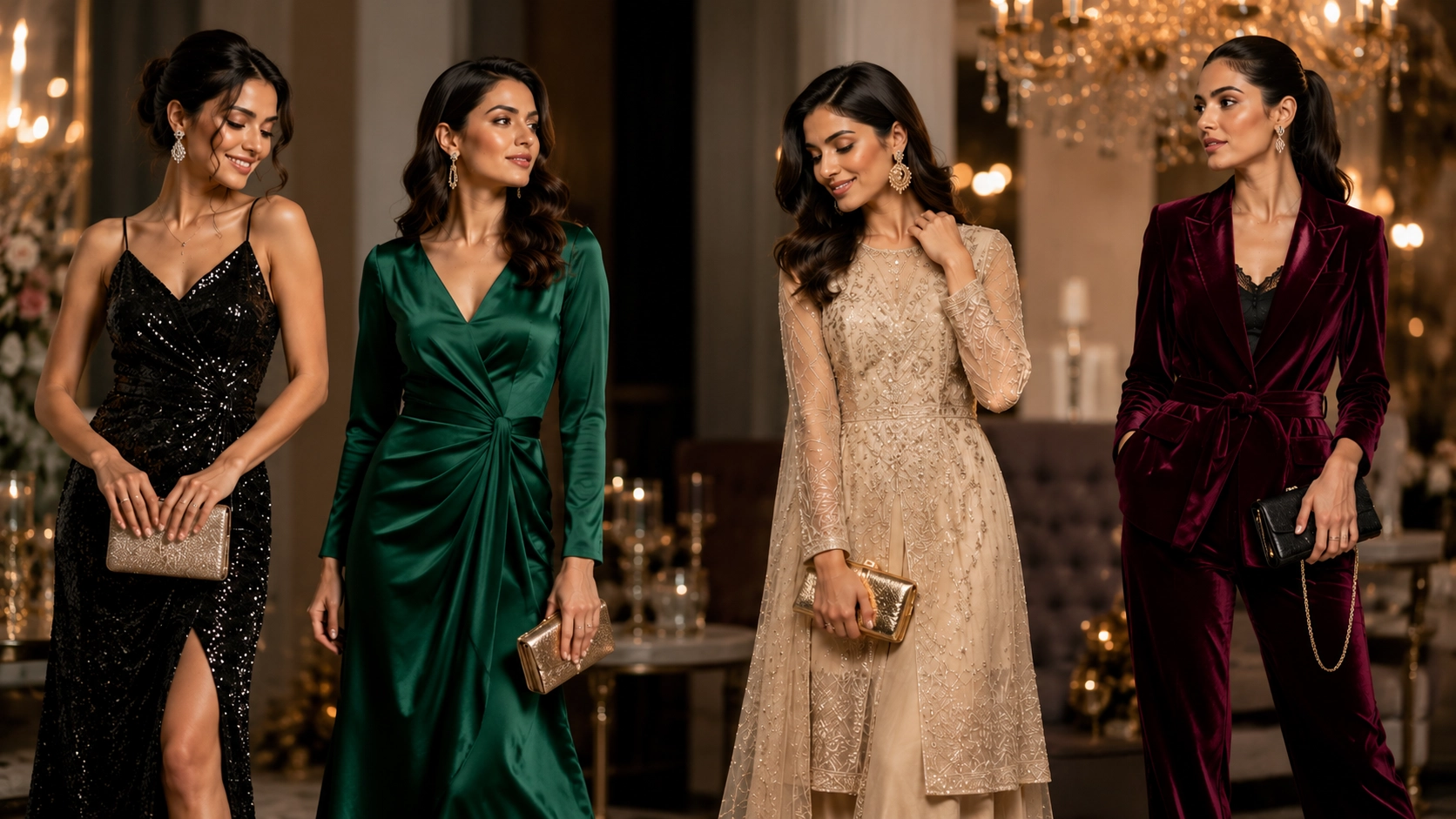
| Festive / Holiday | Cocktail-adjacent with room for shine | Metallics, jewel tones, sequins welcome |
If the invitation doesn’t specify, look at two things: the venue and the time. A restaurant private room at 7 PM leans cocktail. A backyard at 4 PM leans dressy casual. When in doubt, it’s almost always safer to be slightly more dressed up than the room rather than less, you can always remove a jacket or swap flats for heels on arrival, but you can’t conjure formality from nothing.
The Anatomy of a Great Party Outfit
Strip away the trends and every memorable party outfit is built from the same three decisions:
- Silhouette — the shape the outfit creates on your body
- Texture or shine — the element that signals “this isn’t a Tuesday outfit”
- One focal point — the single detail that draws the eye, so nothing competes
Most outfits that feel “off” in party settings have too many ideas happening at once: a bold print, a bold color, and a statement accessory, all in the same look. Pick one loud element and let everything else support it.
Outfit Formulas by Occasion
Birthday Party
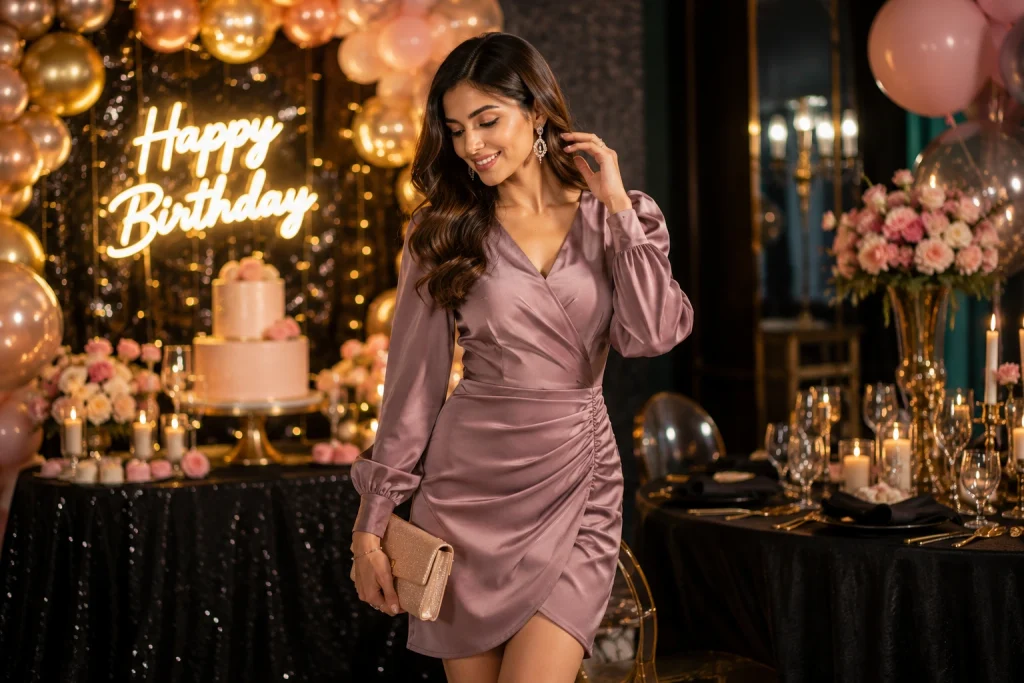
This is the one night your outfit is allowed to be a little louder than usual, since you’re the reason the room is dressed up in the first place. A fitted mini dress in a color you feel genuinely good in, not necessarily trendy, just flattering, paired with strappy heels and one statement piece of jewelry works every time. If dresses aren’t your thing, a satin cami with wide-leg trousers gives the same celebratory energy with more room to move (and eat cake).
Cocktail Party
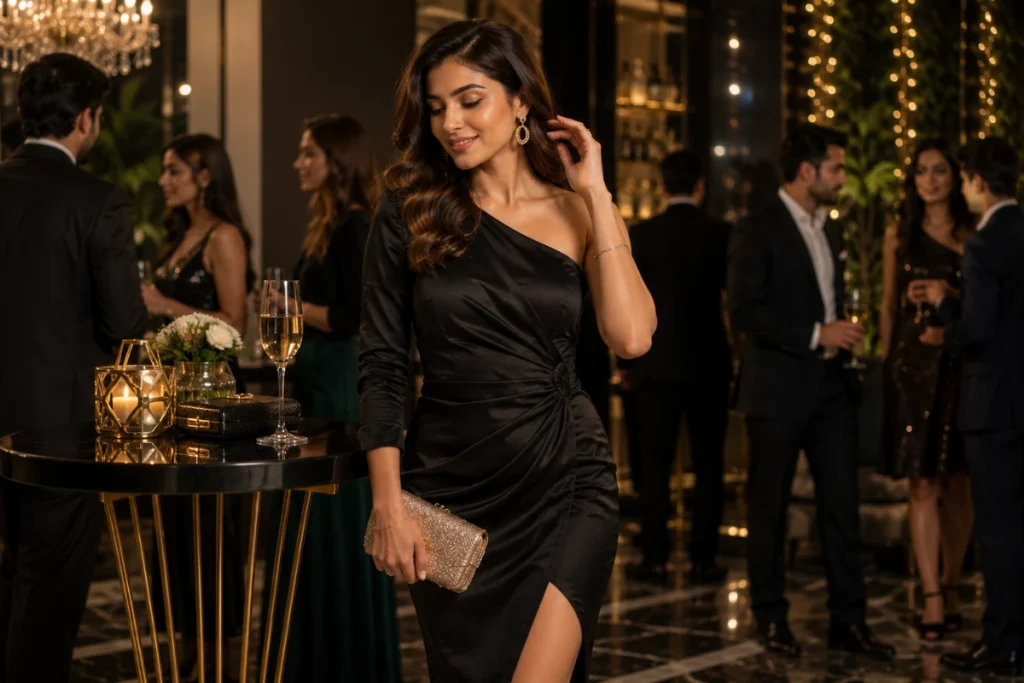
Cocktail attire has a reputation for being complicated, but it really just means “dressier than daytime, shorter or more fitted than formal.” A knee-length dress in satin, crepe, or a subtle sequin works well. Structured shoulders or a defined waist read as intentional rather than thrown-together. Keep jewelry refined here, one strong piece, not several competing for attention.
Office Holiday Party
This is the trickiest category because you’re dressing for two audiences: the festive mood of the party and the professional context of your coworkers. A tailored blazer dress, a sequin skirt with a simple knit top, or a wrap dress in a deep jewel tone all thread that needle. Skip anything with a low neckline, a high slit, or heavy shine head-to-toe, save the maximum shine for a purely social event.

House Party or Casual Get-Together
Comfort matters more here because you’ll likely be standing, sitting on floors or couches, and moving around a smaller space for hours. Well-fitted jeans with a going-out top and ankle boots is a reliable formula. A slip skirt with a fitted tee and sneakers or flats also works if the group leans casual. This is the category where “elevated basics” beat “obviously dressed up.”
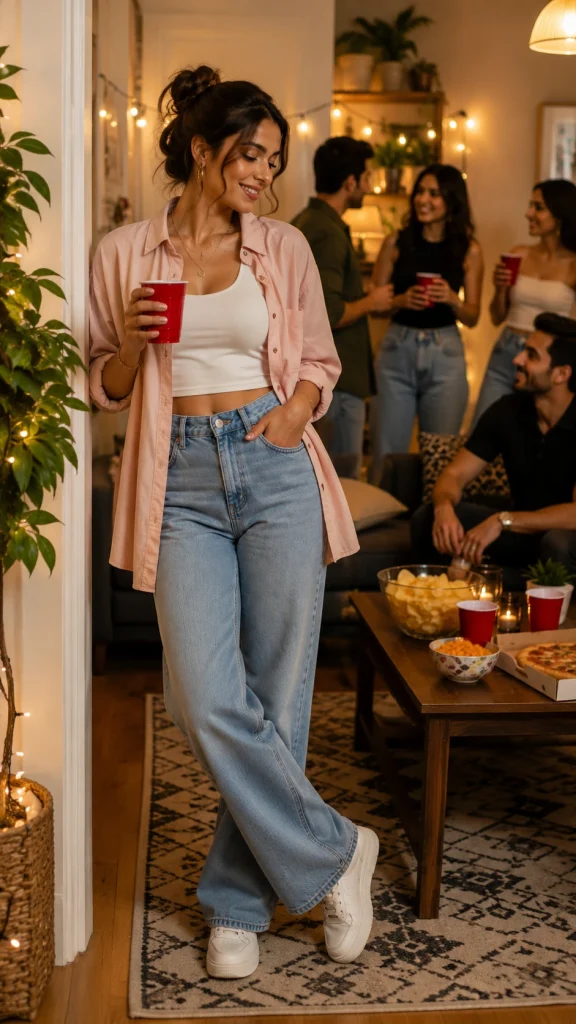
Club Night or Dancing
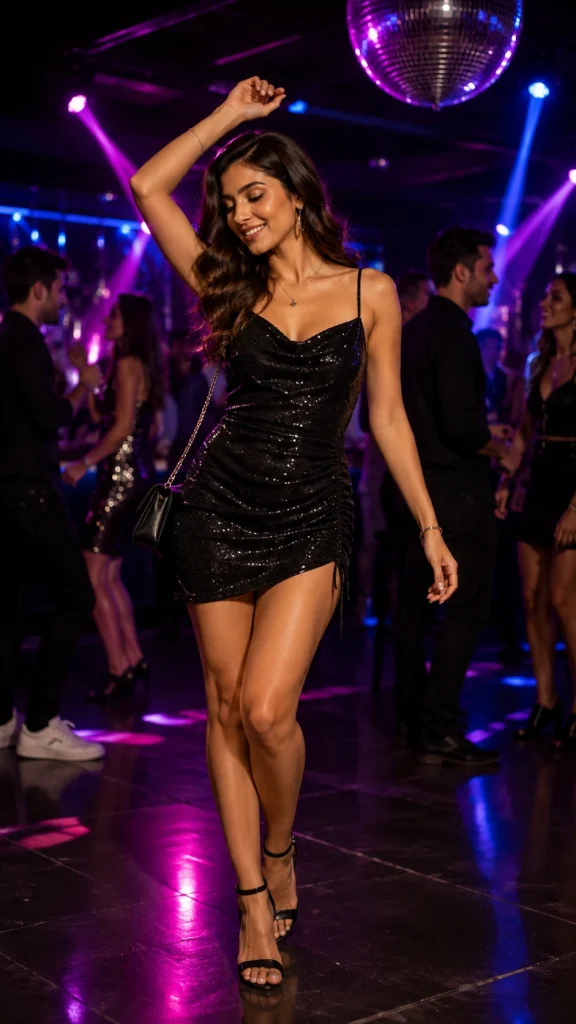
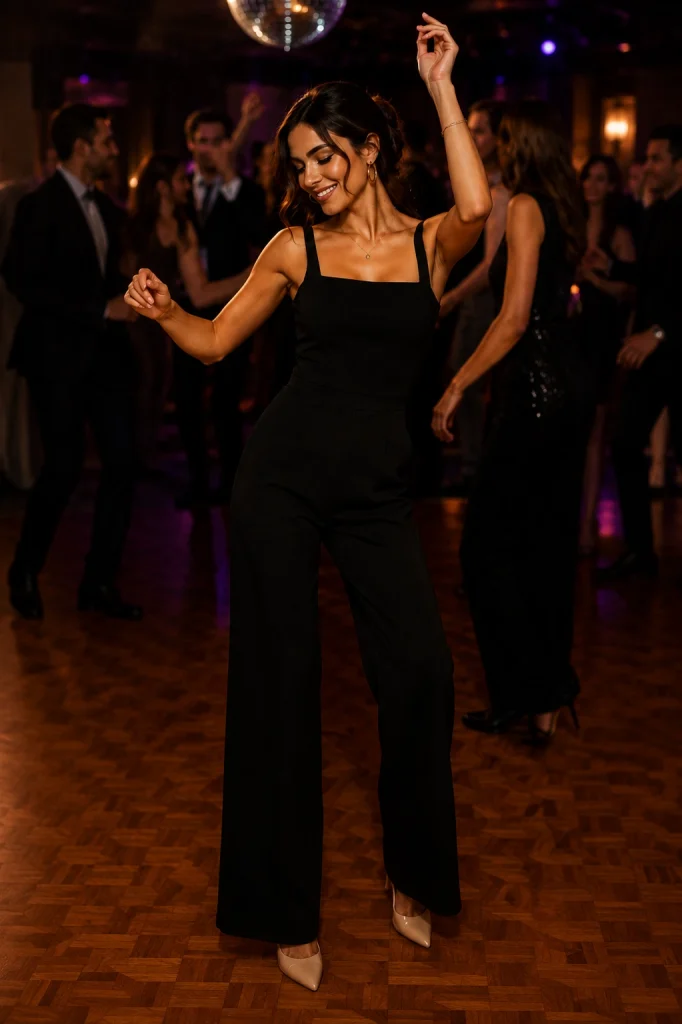
Movement is the priority. Stretch fabrics, fitted-but-flexible cuts, and shoes you can actually dance in matter more than anything else on this list. A bodycon dress in a jersey or ponte knit moves with you rather than fighting you. If heels are non-negotiable, a block heel or platform will hold up far better over a night of dancing than a thin stiletto.
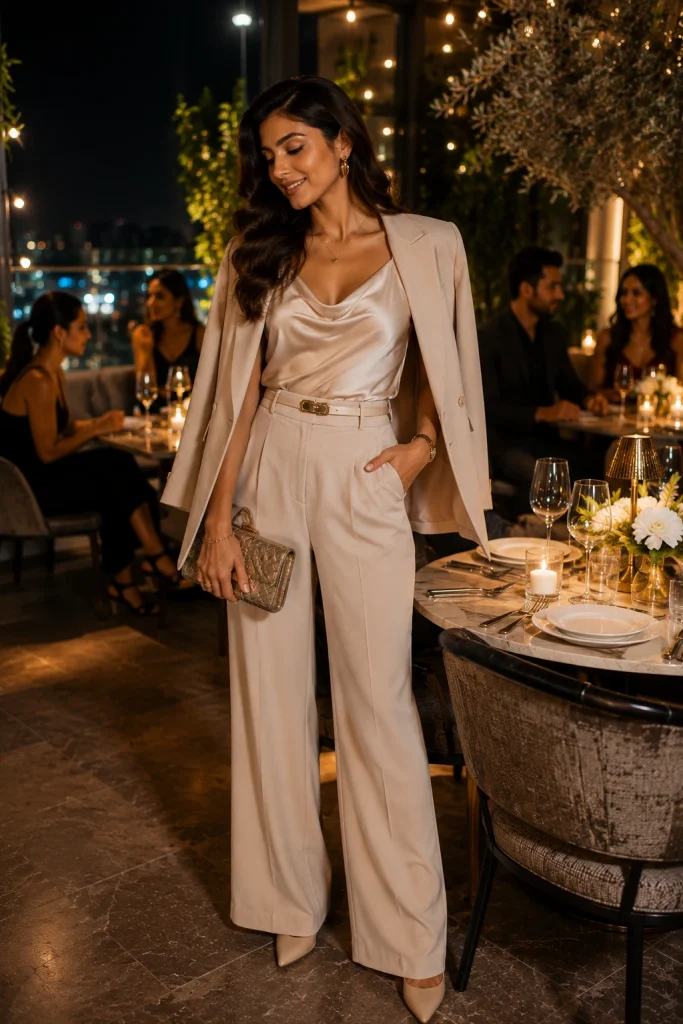
Formal Dinner Party
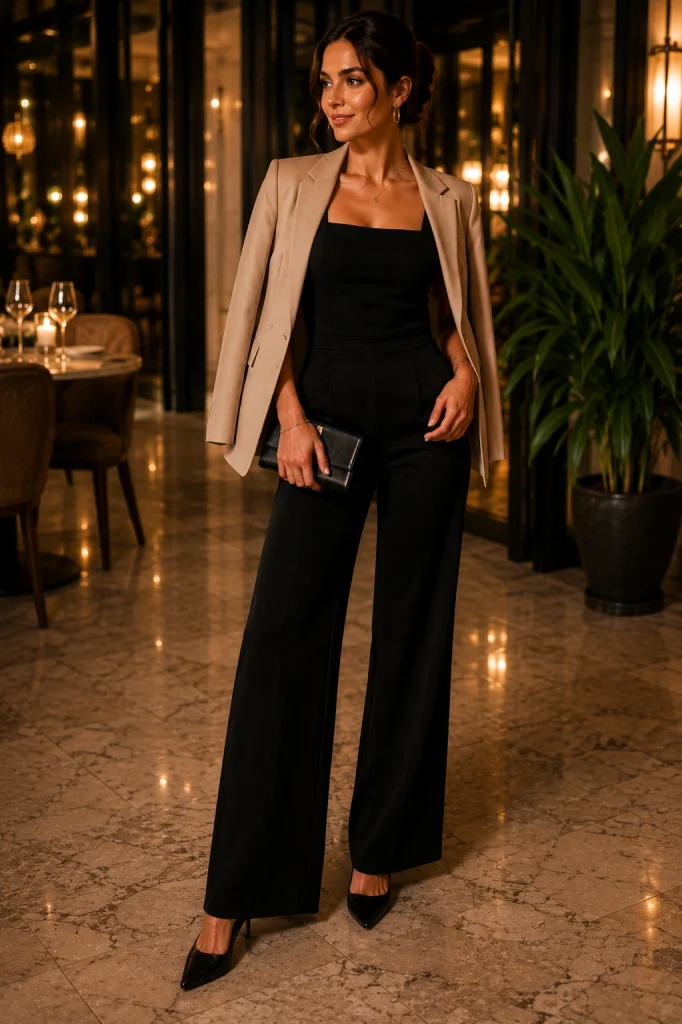
Think restaurant-appropriate elegance rather than club energy. A midi or maxi dress in a rich fabric, or a well-tailored jumpsuit, both work. Layer in a blazer or wrap if the venue runs cold, since formal dinner settings are notoriously over-air-conditioned.
Dressing for Your Body: Fit Principles, Not Rules
Rigid “body type” rules tend to do more harm than good, because they assume every woman with a similar measurement wants to hide or highlight the same things. What actually helps is understanding a few fit principles and applying the ones relevant to you:
- Waist definition creates a classic hourglass line if that’s a look you want, a wrap dress, a belted waist, or a fitted bodice with a fuller skirt all do this.
- Vertical lines (a monochrome outfit, a long open blazer, a column dress) elongate the frame if you want a lengthening effect.
- Structured fabric at the shoulder or bodice adds definition without needing tight fit throughout, which is useful if you want polish without body-consciousness.
- Fluid fabric (jersey, silky crepe) skims rather than clings, which many women find more comfortable for standing and dancing for hours.
- Proportion balance if the top is fitted, a slightly looser bottom (and vice versa) usually photographs and feels more comfortable than fitted-on-fitted.
The goal isn’t to disguise anything. It’s choosing a silhouette that matches how you want to feel in the room, expansive and easy, or sharp and defined and there’s no wrong answer.
Color Pairing That Actually Photographs Well
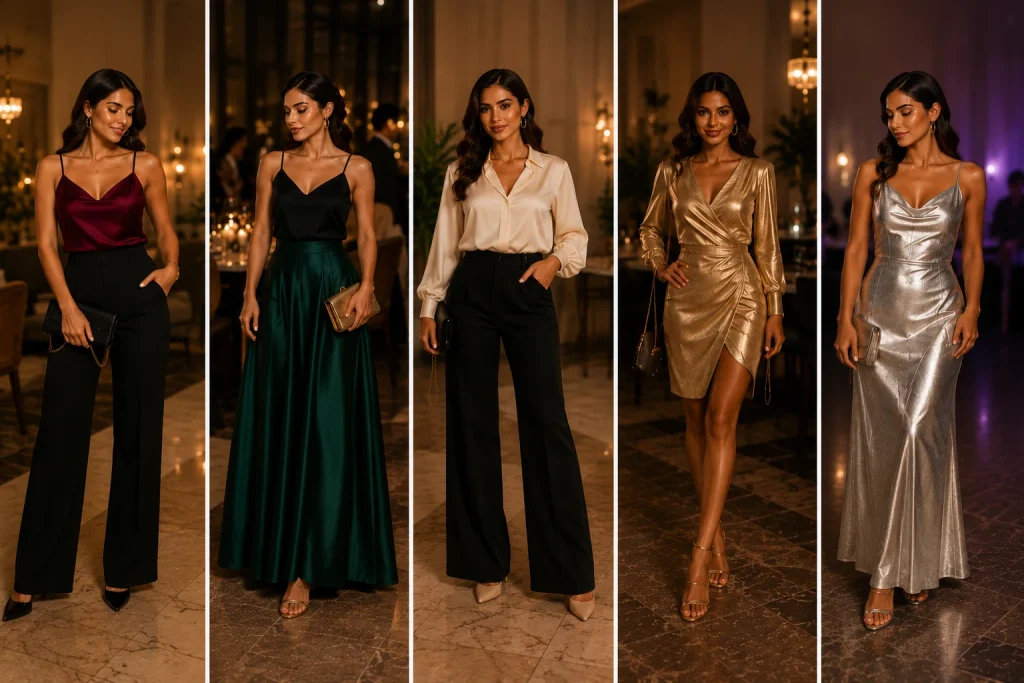
Party lighting is rarely flattering to every color equally. Warm, low lighting (most restaurants, most house parties) makes jewel tones, emerald, sapphire, wine, deep plum look richer than they do in daylight. Bright white can look washed out under warm light, while black photographs reliably in almost any setting, which is part of why it remains a party-dressing default.
If you want color but you’re nervous about it, start with one jewel-toned piece against neutral separates: a wine-colored top with black trousers, or an emerald skirt with a black or cream top. This gives you color impact without full-outfit commitment.
Metallics deserve a separate mention. Gold tends to read warmer and more forgiving under indoor lighting; silver reads cooler and more dramatic, especially under any kind of colored or dim lighting common at night events.
Fabric Guide: What Moves, What Shows, What Survives a Dance Floor
| Fabric | Best For | Watch Out For |
|---|---|---|
| Satin | Cocktail parties, dinner parties | Shows body lines and wrinkles easily |
| Sequin mesh | Birthday parties, festive events | Can feel heavy; check lining for comfort |
| Velvet | Fall/winter formal dinners | Runs warm; avoid for crowded, hot venues |
| Jersey/ponte knit | Club nights, dancing | Limited structure; best in fitted cuts |
| Chiffon | Garden parties, spring/summer events | Can feel too casual for strict cocktail codes |
| Crepe | Cocktail-to-formal | Reliably flattering; slightly less shine |
A fabric that looks stunning in a still photo can behave completely differently once you’re sitting, dancing, or standing for three hours. If you can, try sitting down and raising your arms in the fitting room, it tells you more than the mirror pose does.
Seasonal Styling
| Season | Fabric Direction | Layering Note |
|---|---|---|
| Winter | Velvet, wool-blend, heavier satin | Bring a real coat, not just a shawl cold changes your whole silhouette under outerwear |
| Spring | Chiffon, lightweight crepe, cotton blends | A light jacket or wrap covers unpredictable evening temperature drops |
| Summer | Linen blends, light jersey, breathable satin | Choose breathable fabric even for dressy looks, comfort affects how confident you feel |
| Fall | Crepe, midweight knit, faux leather accents | Transitional layering: a blazer or leather jacket over a dressier base |
The Dinner-to-Dance-Floor Method
Many parties aren’t one static event, dinner rolls into dancing, or a cocktail hour rolls into a late-night after-party. Instead of packing a full outfit change, build around one adaptable base:
- Start with a fitted dress or jumpsuit in a stretch-friendly fabric.
- Add a blazer, wrap, or jacket for the more formal early hours.
- Remove the layer and swap earrings for something bolder once the night shifts into a more social, high-energy phase.
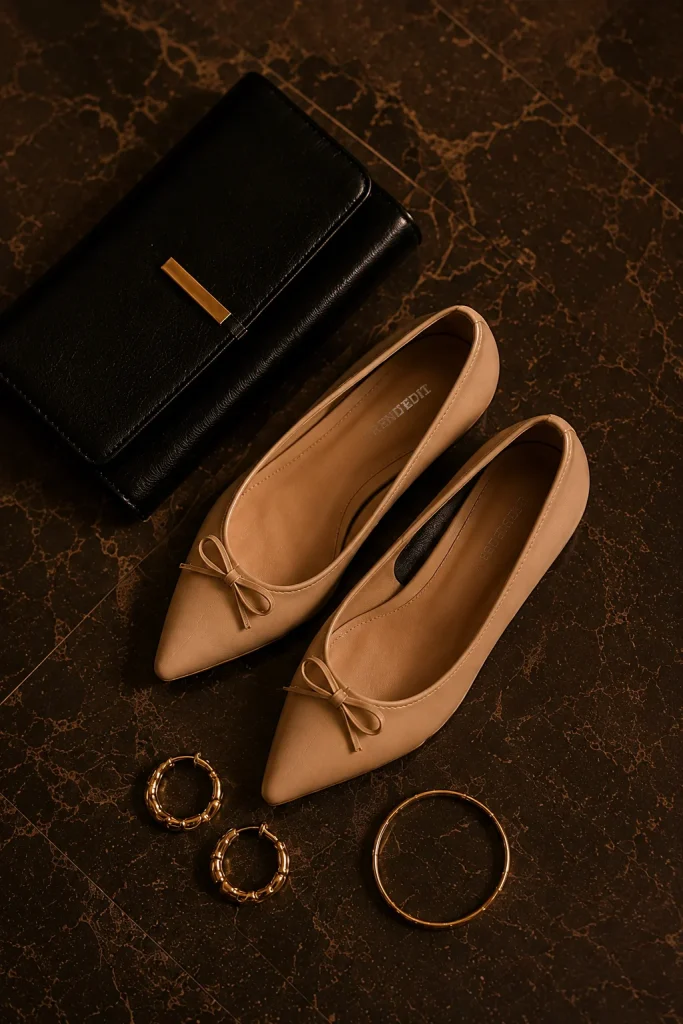
- Keep a flat pair of shoes nearby (or in a bag) if heels are part of your look, your feet will thank you, and your outfit stays intact instead of you leaving early because you’re uncomfortable.
This one framework solves more real-world party-dressing stress than any single outfit idea, because it accounts for the party actually changing shape over the course of the night.
Accessories: The One-Focal-Point Rule
Pick a single hero element and build quietly around it:
- Statement earrings → keep the necklace minimal or skip it entirely
- Bold clutch → keep jewelry simple
- Layered necklaces → skip statement earrings
- Standout shoes → keep the rest of the accessories understated
This isn’t a hard rule so much as a reliable habit: when in doubt, remove one accessory before you leave the house rather than add one.
Footwear That Won’t Betray You by 10 PM
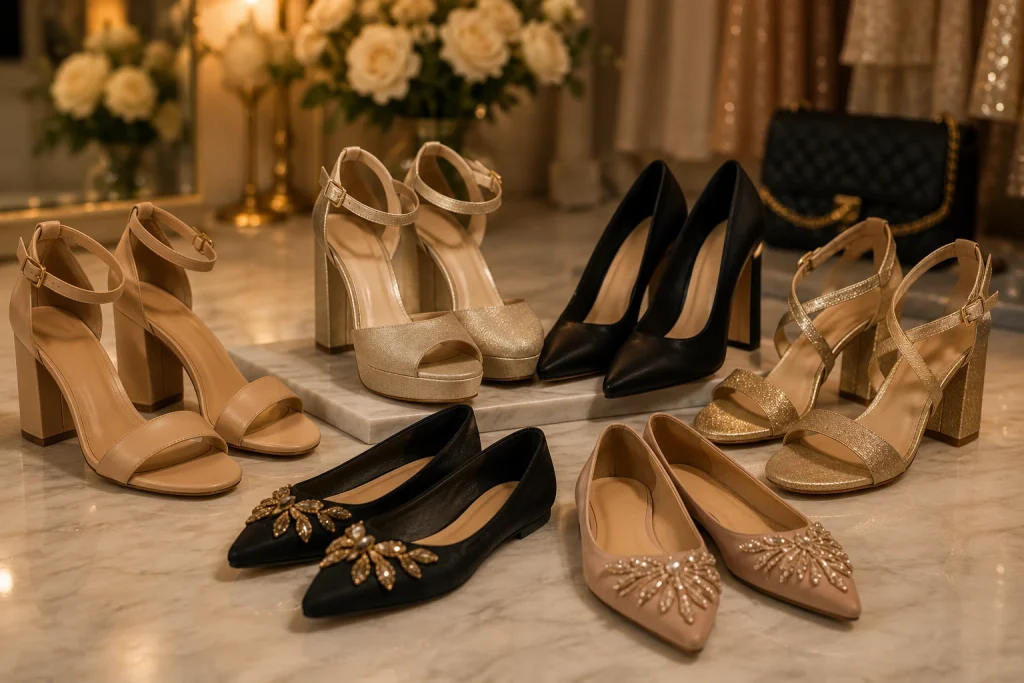
The best-looking shoe in the store is irrelevant if you’re limping by the time dinner ends. Block heels and platforms distribute weight more evenly than thin stilettos, which matters enormously for events involving standing, dancing, or uneven outdoor ground. If heels are essential to the look, break them in beforehand — even twenty minutes of walking around your home in them tells you a lot. Embellished flats or low block heels have become a completely acceptable, even stylish, alternative for house parties and casual dressy events, not a compromise.
Budget vs. Premium: Where to Spend, Where to Save
You don’t need to spend the most on the item you’ll wear the least. A general guide:
- Spend more on: outerwear you’ll rewear across many events (a good blazer, a real coat), and well-fitted basics that anchor multiple outfits (tailored trousers, a quality slip dress in a neutral color).
- Save on: trend-driven statement pieces, sequins, and anything in a very specific “occasion only” silhouette you’re unlikely to wear more than a couple of times.
- Consider renting or borrowing for a single high-formality event rather than buying something you’ll wear once — this is both a budget-smart and sustainability-conscious choice.
Common Mistakes to Avoid
- Overdressing relative to the room rather than the invitation, always weigh venue and time alongside the stated dress code.
- New shoes, no test run blisters end nights early.
- Matching every metal and every accessory too literally, which can look costume-like rather than intentional.
- Choosing fabric based only on the photo, ignoring how it will feel after hours of wear.
- Skipping a layer entirely and being cold from arrival to departure, which affects posture and confidence more than people expect.
- One outfit, zero backup plan for a party that shifts from dinner to dancing.
Pre-Party Outfit Checklist
- Confirmed the dress code (or estimated it from venue + time)
- Chosen one focal point, kept everything else supporting
- Tried sitting and raising arms in the outfit before the event
- Broken in shoes or packed a backup flat pair
- Checked the weather and packed an appropriate layer
- Confirmed the outfit works for both early and later parts of the night
FAQs
What is considered a party outfit?
A party outfit is any look that’s dressier than everyday wear and appropriate to the event’s specific dress code, this can range from elevated jeans and a going-out top for a casual gathering to a full cocktail dress for a formal event.
What should I wear to a party if I don’t have a dress?
A jumpsuit, a skirt-and-top combination, or tailored trousers with a dressy blouse all work as dress alternatives and often photograph just as well.
How do I dress for a party without overdoing it?
Pick one focal point, color, shine, or a statement accessory, and keep the rest of the outfit simple and supportive rather than competing for attention.
What shoes go with a party outfit?
Strappy or block heels suit cocktail and dinner settings; block heels or embellished flats are better suited to dancing or longer, more casual events.
Can I wear jeans to a party?
Yes, for casual or dressy-casual events. Pair well-fitted jeans with a going-out top, statement shoes, and one bold accessory to elevate the look.
What’s the difference between cocktail and semi-formal?
Cocktail typically means knee-length or fitted dressy wear appropriate for evening; semi-formal sits one step above that, often calling for longer hemlines or more elevated fabric and tailoring.
Final Thoughts
The outfits that actually work at a party aren’t the ones that look best standing still in a mirror, they’re the ones that hold up through a full evening of sitting, standing, dancing, and changing light. Start with the dress code, choose a silhouette that matches how you want to feel, commit to one focal point, and build in enough comfort that you’re not thinking about your outfit by 9 PM. That’s the whole formula, and it works for almost any party you’re invited to.