Fashion Accessories for Women: The Complete Guide to Building a Collection That Actually Works
Fashion Accessories for Women: Ask any stylist what separates a “put-together” outfit from one that just looks fine, and the answer is almost never the clothes themselves. It’s the accessories the earrings that catch the light, the bag that fits the moment, the scarf tied just so. Accessories are the fastest, cheapest way to change how an outfit reads, and yet most women either under-use them out of uncertainty or over-buy them without a plan.
This guide is built to fix both problems. Instead of handing you a random shopping list, it walks through the reasoning stylists actually use: what to prioritize, how pieces work together, and how to avoid the mistakes that make accessories look like an afterthought instead of a finishing touch.
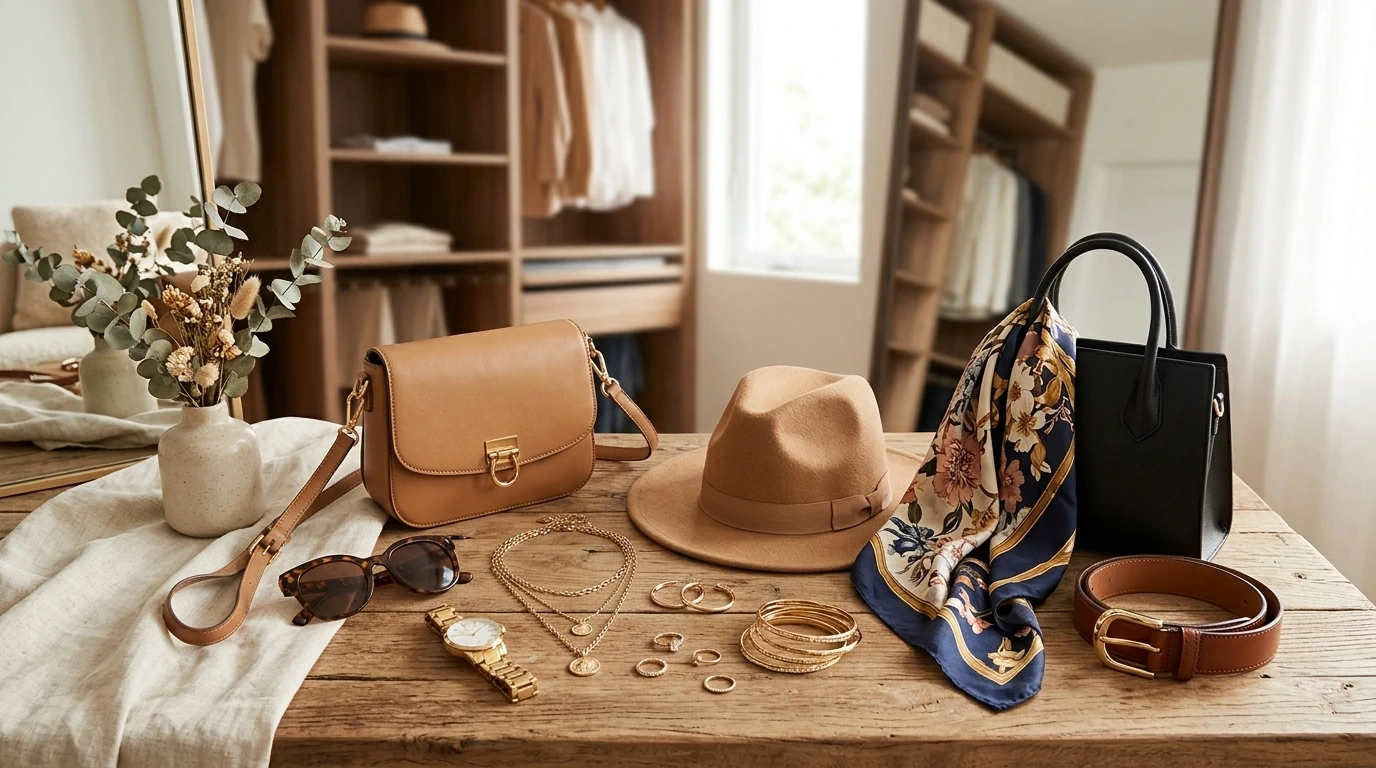
Quick Answer: The 7 Accessories Worth Owning First
If you’re starting from scratch or trying to simplify an overstuffed jewelry box, these seven pieces cover the widest range of outfits and occasions:
- A pair of gold or silver stud earrings (your everyday default)
- A pair of statement earrings in your best metal tone
- A medium crossbody or structured tote bag in a neutral color
- A thin belt in leather that matches your most-worn shoes
- A silk or silk-blend scarf in a versatile pattern
- Classic sunglasses in a shape that suits your face
- One “good” watch or bracelet stack you can wear daily
Everything else the seasonal trend pieces, the statement necklaces, the fun hair clips builds outward from this foundation.
Why Accessories Matter More Than People Think
Clothing sets the outline of an outfit, but accessories are what people actually notice up close. Earrings and necklaces sit near the face, where eye contact naturally lands. A bag is often the first thing someone registers about your outfit from a distance, simply because of its size and shape. That’s why a $40 dress can look expensive with the right accessories, and a $400 dress can look flat without them.
There’s also a practical case for accessories: they stretch a wardrobe. A capsule of ten clothing pieces can look like thirty different outfits once you start rotating scarves, jewelry, and bags through them. That’s the real return on investment not the price tag of any single piece, but how many outfits it touches.
Building Your Accessory Capsule
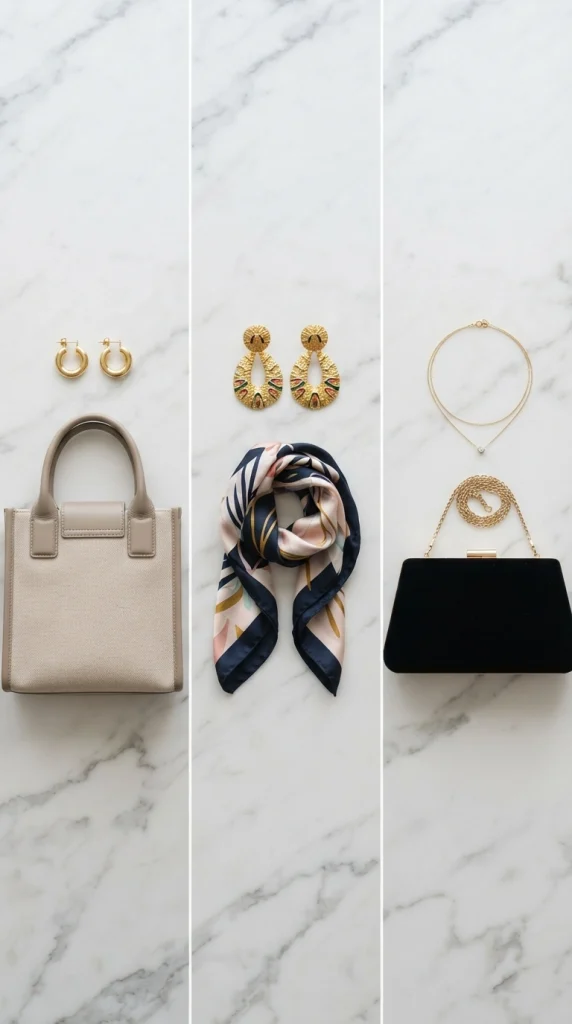
Think of your accessory collection in three tiers: foundation pieces you wear constantly, rotation pieces that add variety, and occasion pieces you pull out rarely but need on hand.
| Tier | Purpose | Examples | How Many to Own |
|---|---|---|---|
| Foundation | Worn weekly, matches almost everything | Stud earrings, neutral tote, thin belt, classic watch | 4–6 pieces |
| Rotation | Adds personality and seasonal variety | Statement earrings, printed scarves, colorful bag, layered necklaces | 6–10 pieces |
| Occasion | Reserved for specific events | Formal clutch, statement necklace, fine jewelry, evening earrings | 2–4 pieces |
Notice that foundation pieces are the smallest category by design they need to be high-quality and neutral enough to disappear into any outfit, so it makes sense to own fewer but better versions.
The 3-Point Rule: How Much Is Too Much
A simple trick stylists use to avoid over-accessorizing: count your “focal points.” Earrings, a necklace, a ring, a bracelet, a bag, and a belt can each count as one point of visual interest. Wearing all six at once usually reads as cluttered rather than polished.
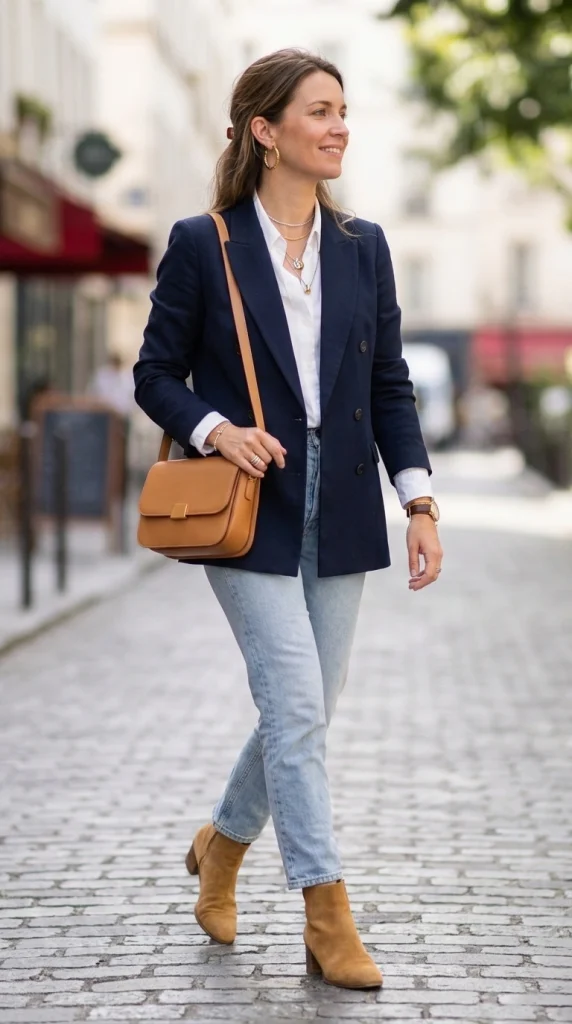
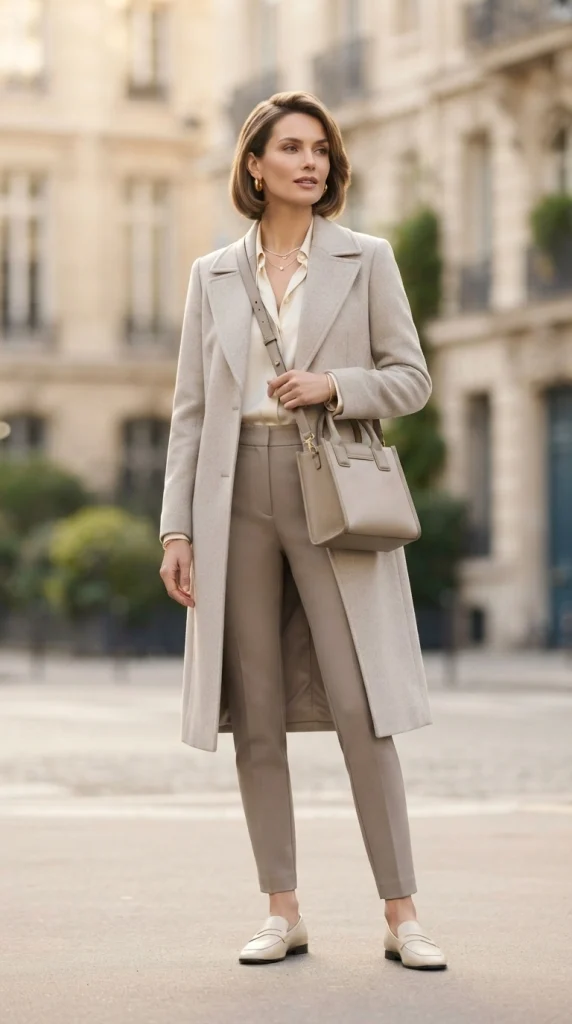
The 3-point rule keeps things in check pick two to three accessory categories to feature per outfit, and let the rest stay quiet. A statement earring and a structured bag are plenty on their own; add a delicate bracelet if you want a third point, but stop there. This single habit solves most of the “why doesn’t this look right” confusion people feel when getting dressed.
Jewelry: Metals, Layering, and Mixing Rules
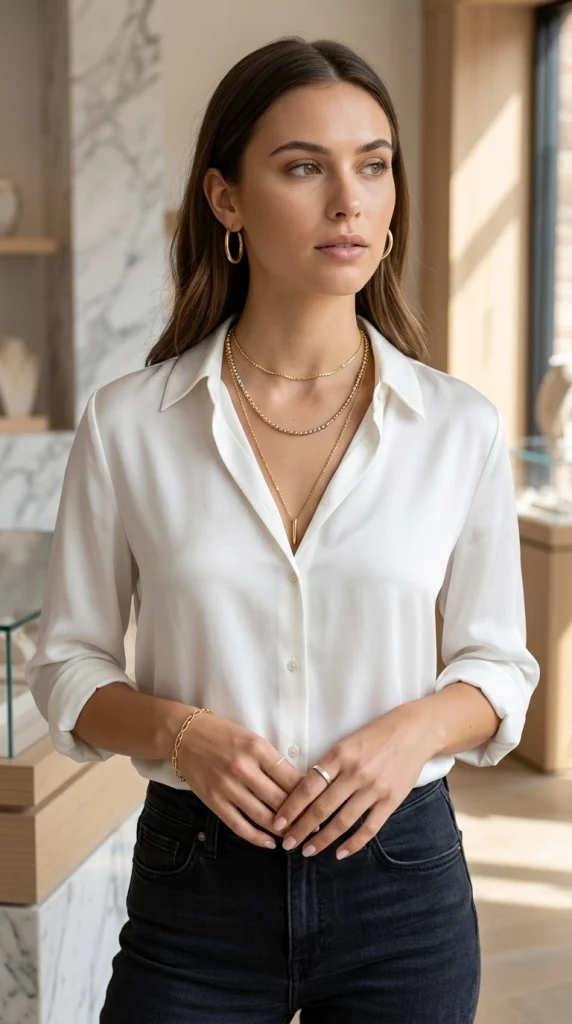
The old rule that gold and silver can never mix is outdated. What actually matters is intention. Mixed-metal jewelry a necklace with both gold and silver elements, for example signals that the mix is deliberate. Wearing one gold earring and one silver ring, on the other hand, can look accidental unless the rest of the outfit ties it together.
A safer approach for beginners: pick a “dominant” metal for the outfit (say, gold) and let it show up in at least two places earrings and a bracelet, for instance while a single silver piece, like a ring, plays a supporting role. This creates enough consistency to look intentional while still allowing flexibility.
For necklace layering, vary the lengths. Two necklaces of the same length sitting on top of each other tend to look tangled rather than styled. A choker-length piece, a mid-length pendant, and a longer chain create a visual staircase that reads as effortless.
Bags: Getting the Proportions Right for Your Frame
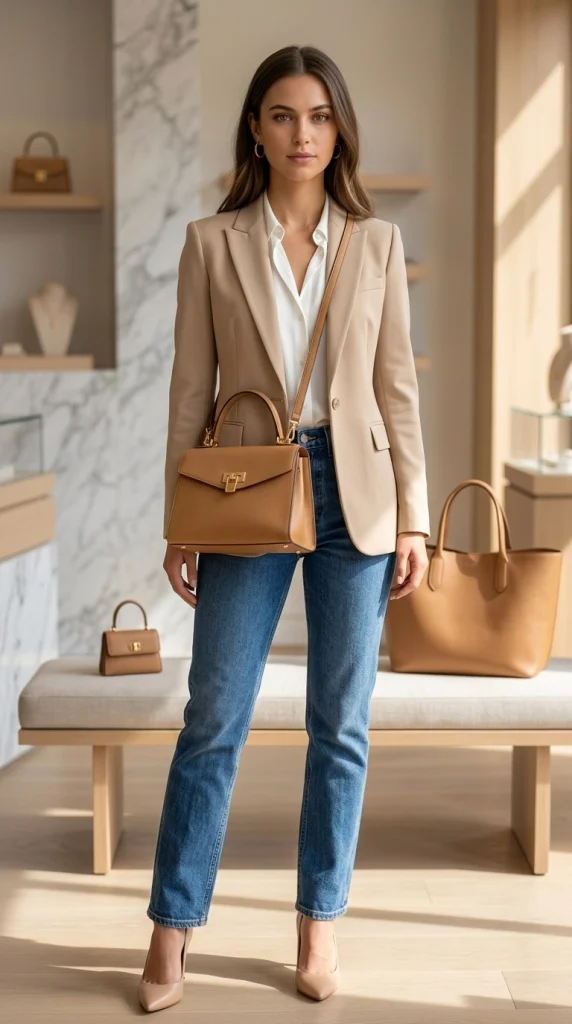
Bag proportion matters more than bag style. A tiny micro-bag on a petite frame can look charming, but the same bag on a taller frame can look like an accessory borrowed from a child. The reverse is true for oversized totes they can overwhelm a smaller frame while looking perfectly balanced on someone taller.
A practical guideline: the bag should sit roughly between your hip and your ribcage when worn crossbody, and it shouldn’t dwarf your torso when carried by hand. If you’re between sizes, a medium structured bag is the safest, most versatile choice it photographs well, works for both day and evening, and doesn’t fight with any particular body shape.
Color-wise, a neutral bag (black, camel, or tan) earns its keep by matching almost everything, while a colored or patterned bag works best as a rotation piece rather than a foundation one.
Scarves, Belts, and Hair Accessories: The Underrated Trio
These three get overlooked constantly, which is exactly why they’re some of the most effective ways to look distinctive without much effort.
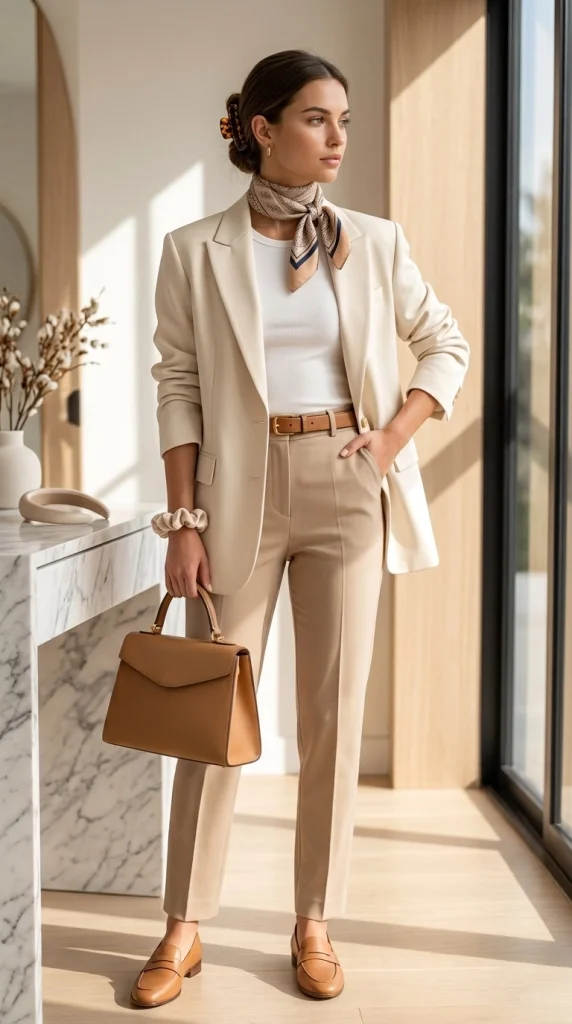
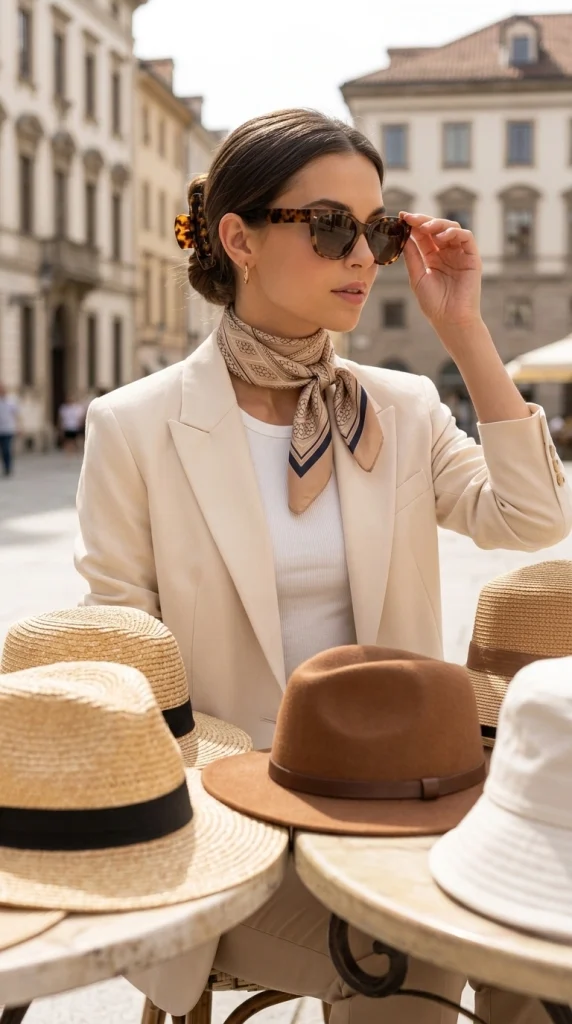
Scarves do double duty worn around the neck for warmth and polish, tied on a bag handle for a pop of pattern, or used as a hair wrap for texture. A silk scarf in a versatile print (think small geometric or paisley patterns in colors that match your existing wardrobe) will get more mileage than a scarf in a single bold, outfit-specific color.
Belts are one of the fastest ways to add shape to an outfit, especially over dresses, cardigans, or oversized blazers. A thin belt in the same leather tone as your most-worn shoes creates a subtle color echo that reads as intentional styling, even though it’s a small detail.
Hair accessories claws, headbands, silk scrunchies have shifted from purely practical to genuinely stylistic. A well-chosen hair clip can act as the “third point” in the 3-point rule without competing with jewelry near the face.
Sunglasses and Hats: Function Meets Style
Sunglasses are one of the few accessories people wear almost daily, so it’s worth choosing shapes based on face structure rather than trend alone. Rounder frames tend to soften angular faces, while angular frames add definition to rounder ones. A classic shape like a slightly oversized rectangle or a timeless cat-eye tends to outlast trend cycles better than very specific “of-the-moment” shapes.
Hats function similarly: a structured hat (like a fedora or a wide-brim style) reads more polished for daytime outfits, while a soft bucket hat or baseball cap leans casual. Neither is “better” it depends on the outfit’s overall formality.
Accessorizing by Occasion
| Occasion | Jewelry | Bag | Extras |
|---|---|---|---|
| Office / Work | Stud earrings, thin bracelet | Structured tote or satchel | Simple belt, classic watch |
| Casual Daytime | Layered necklaces, hoops | Crossbody bag | Sunglasses, scarf on bag handle |
| Date Night | Statement earrings, delicate necklace | Small clutch or top-handle bag | Fine bracelet, subtle heels |
| Formal Event | Fine jewelry set (matching metal) | Evening clutch | Wrap or shawl if needed |
| Travel | Minimal, secure jewelry | Crossbody or backpack | Sunglasses, scarf, comfortable belt |
This table isn’t meant to be a strict rulebook it’s a starting point for the reasoning behind each choice, which you can adjust based on your personal style and comfort level.
Seasonal Accessory Swaps
Accessories are one of the easiest ways to shift a wardrobe seasonally without buying new clothes. In spring and summer, lighter materials straw bags, shell or resin jewelry, and bright or pastel scarves feel appropriate and practical. Fall and winter call for richer tones, textured jewelry (think matte gold or oxidized silver), and functional layering pieces like wool scarves and leather gloves that still look intentional rather than purely utilitarian.
The trick is treating two or three key pieces as “seasonal swaps” a summer straw tote and a winter structured leather bag, for example rather than replacing your whole accessory collection every few months.
Budget vs. Premium: Where to Spend and Where to Save
Not every accessory deserves the same investment. A useful way to think about it: spend more on pieces that touch your skin daily (jewelry that won’t tarnish, a bag with sturdy hardware) and save on pieces that follow fast-moving trends (a specific colored scarf, a statement necklace you’ll wear for one season).
Worth investing in: a well-made neutral bag with strong stitching and hardware, everyday jewelry in real gold vermeil or sterling silver (it won’t turn your skin green or lose its shine quickly), and classic sunglasses with genuine UV protection.
Fine to buy budget-friendly: trend-driven statement pieces, seasonal color accents, and hair accessories, since these naturally cycle out faster and don’t need to last a decade.
Cost-per-wear is the most honest way to judge value here. A $150 bag worn twice a week for three years costs pennies per wear. A $15 trend necklace worn five times before it’s retired is a fine budget choice too the goal isn’t spending more, it’s spending intentionally.
Camera-Ready: Accessorizing for Hybrid Work and Video Calls
With so much professional life happening on video calls, accessories near the face carry more weight than they used to. Earrings register clearly on camera even when the rest of an outfit is cropped out, making them one of the highest-impact, lowest-effort choices for remote workdays. A simple hoop or stud in a metal that complements your skin tone reads as polished without demanding attention.
Necklaces are trickier on video anything too long tends to disappear below the frame, while choker-length pieces stay visible and add definition near the collarbone. If you’re dressing primarily for video calls, prioritize earrings and a well-chosen top over a full jewelry stack that no one will see anyway.

Common Accessorizing Mistakes to Avoid
- Matching everything too literally. A gold necklace doesn’t require gold earrings, a gold bracelet, and gold sandals pick one or two anchor pieces and let the rest be neutral.
- Ignoring proportion. A tiny bag on a tall frame or an oversized tote on a petite frame fights against the body rather than complementing it.
- Wearing all delicate jewelry at once. Mixing scale one statement piece with smaller supporting pieces reads more intentional than uniform delicacy.
- Choosing trend pieces as foundation items. A viral accessory rarely earns its keep as an everyday staple; save trend spending for rotation-tier pieces.
- Forgetting function. A bag too small to hold your essentials or sunglasses without real UV protection cause regret no matter how good they look.
Caring for Your Accessories So They Last
Simple habits extend the life of accessories significantly. Store jewelry separately to prevent tangling and scratching a lined jewelry box or individual pouches work well. Avoid spraying perfume directly onto jewelry, since the alcohol content can dull finishes over time. For leather bags and belts, a light conditioning treatment every few months prevents cracking, and stuffing bags with tissue paper when not in use helps them hold their shape.
Buying fewer, better pieces and caring for them properly is also the most sustainable approach to accessories it reduces waste and, over time, tends to cost less than replacing poorly made pieces again and again.
Accessory Capsule Starter Checklist
- Everyday stud or hoop earrings in your go-to metal
- One pair of statement earrings
- A neutral, medium-sized structured bag
- A thin belt matching your most-worn shoe color
- A versatile silk or silk-blend scarf
- Classic sunglasses suited to your face shape
- A simple watch or everyday bracelet
- One occasion-only piece (fine necklace or clutch) for events
FAQs
What are the 5 essential accessories every woman should own?
Stud earrings, a neutral structured bag, a thin belt, classic sunglasses, and one statement piece whether that’s earrings or a necklace cover the widest range of outfits and occasions.
How many accessories is too many?
Use the 3-point rule: aim for two to three featured accessory categories per outfit (for example, earrings and a bag) rather than layering jewelry, a belt, a scarf, and a hat all at once.
Can you mix gold and silver jewelry?
Yes, as long as it looks intentional pick a dominant metal that appears in at least two pieces, and let a single opposite-metal piece play a supporting role.
What accessories make an outfit look expensive?
Well-fitted proportions (especially bag size), quality materials that hold their shine or shape, and restraint fewer, better pieces tend to look more expensive than a lot of small trendy ones.
How do I accessorize a plain outfit?
Start with one statement piece bold earrings or a colorful bag and keep everything else minimal so that one piece has room to stand out.
What’s the difference between statement and everyday accessories?
Everyday accessories are neutral and versatile enough to wear constantly without competing with an outfit; statement accessories are meant to be noticed and work best in smaller doses.
Final Thoughts
Building a great accessory collection isn’t about owning more it’s about owning pieces that work together and reflect how you actually get dressed. Start with the foundation pieces, layer in a few rotation items that suit your personal style, and keep occasion pieces for when you truly need them. Once the basics are in place, accessorizing stops feeling like guesswork and starts feeling like the easiest, most creative part of getting dressed.